Benefits of Project Management with Technology Advisors
Why Do I Need Project Management?
A software implementation has a lot of moving parts. Project management keeps everything organized with defined use cases, phased sprints, daily scrums, risk assessment, and issue documentation. A go-live plan that takes all these moving parts into consideration is crucial for successful deployment.
That's why Technology Advisors provides you with skilled management professionals to run your software project. Our PMO team, together with key leaders in your organization, work to keep your project on track and within budget. We use social project management tools that unite TAI and customer teams around the project and provide information such as a Kanban board, burndown rates, issue logs, and scheduling.
Our Project Management Approach
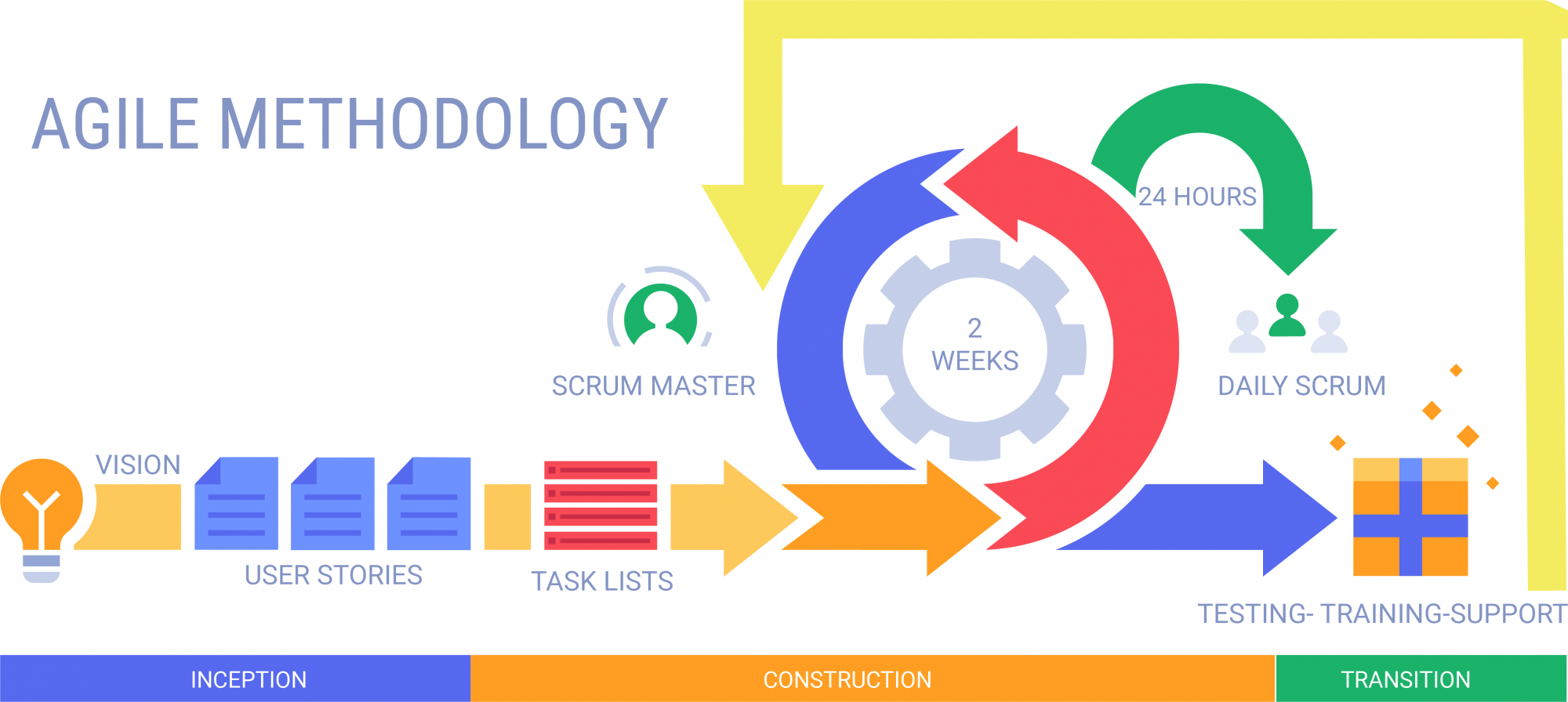
Technology Advisors follows an agile methodology to manage projects. Below are some of the tools and techniques we use to stay focused on your project.
Kanban Board
Kanban in Japanese means "cards you can see". A Kanban board is a visual display that shows open, in progress, and completed tasks. It is kept up-to-date in real time by our project managers and developers. The entire project team has access to this information and can see the current project status at any time.
Scheduling
In an agile approach, use cases are turned into tasks, which are then organized into sprints. Technology Advisors builds around a two week sprint cycle and typically has 3-7 sprints in an average project.
Burndown Chart
Burndown rates are a measurement of how quickly tasks are completed in each sprint. The burndown chart is used to measure the progress of the sprints, therefore determining the project's estimated completion date.
Backlog Planning
A backlog defines tasks you wish to address in the future. Backlog planning assigns tasks to the correct sprint based on priority and ROI. The backlog is built by uncompleted tasks and new use cases that are found while using the software. TAI updates the backlog after every sprint.
Issue Logs
Issues are problems that emerge during software construction, either during the review process or during the testing process. Issues are either fixed immediately or, if they're problems with requirements, they are moved to the backlog. Issues that show up after go-live are addressed by support.
Budgeting
Budgeting is an estimate of the costs of the overall project. The budget used is calculated daily from the work logs. By comparing the actual spend against the remaining tasks we can calculate the overall expected budget.
Change Requests
Change requests happen when an implemented user story does not end up solving the problem it was meant to solve. In this case, the user story is moved to backlog. Change requests can alter the project scope, budget, and schedule.
Risk Analysis
Every use case is assigned a risk factor. Risk analysis calculates the overall risk of the project and determines the highest risk items. Risk is determined by knowledge and experience. They combine to become a probability for overall project success. We manage risk by addressing high risk items first.
What Customers Say About Us
Project Management for Every Need
Technology Advisors offers project management for various types of projects. We'll assess your individual goals to build the right approach for you.
Project Management for CRM Implementations
After committing to a CRM solution, the next step is to plan how you'll implement it. What's your timeline? Do you have any special fields or functions to build? Which key players on your team should have input? To make this process as productive as possible, Technology Advisors assigns you a dedicated project manager. The project manager coordinates the necessary tasks, builds a framework for how those tasks will be completed, and manages the communication to keep the project moving forward and to address any issues head on.
Project Management for Migration & Integration
Migrating and integrating data requires patience and diligence. The data must be clean, the use cases must be defined, and the outcomes must be anticipated. Technology Advisors built its own powerhouse migration and integration solution (StarfishETL), so we could have the adaptability to guide even your most complicated data projects.
Project Management for Software Rescue/ReDeploy
Have software that's dead in the water? If you've purchased a solution and are no longer finding value in it, it may be time for a rescue and redeploy. TAI conducts a workshop to identify your key problems and the best solutions to resolve those problems. This gives us a roadmap for redeploying your implementation. Rescue and redeploy project management exponentially increases your likelihood of success.
Project Management for Custom Projects
Software solutions sold out-of-the-box are a great baseline for many businesses, but for those with more complex needs, a one-size-fits all approach just won't do. Navigating a custom project can be confusing, time consuming, and expensive without the proper planning and project management. Technology Advisors mitigates these obstacles with detailed project scoping, planning, requirements, testing, and documentation - all while keeping your key players in the loop and your timeline on track.
Which Project Management Approach is Best for Me?
Need help with project management? Reach out to request a FREE consultation with our team.
Frequently Asked Questions
More Related Content
Timelinx Project & Service Management Inside Infor CRM
Timelinx is a project and service management solution that lives inside Infor CRM to make it easy for teams to manage time and expenses, pay out expenses sooner, and pull better reporting metrics. This demo shows how it works inside Infor and its mobile application.
Watch Video
From Chaos to Control: Capitalizing on Project & Service Management Software
As recently as three years ago, many of our clients were still using Excel spreadsheets to handle internal processes. So, it got me to thinking: have most of us finally been forced to evolve past the spreadsheet, or are there still diehard spreadsheet users out there? I got my answer by talking to our friends at TimeLinx Software. TimeLinx is a project and service management (PSM) solution that automates all the elements of a services organization.
Continue reading
CRM Risk Analysis & Management
When you perform risk analysis for your CRM project, you are identifying potential threats that prevent you from successfully reaching your objectives. Risks are simply things that COULD happen, not things that necessarily WILL happen, but without a plan for the “what ifs”, those minor risks could turn into major issues. Analyzing risk early on prevents this from occurring.
Continue reading
What is Software Project Management and do I Need it?
Clients sometimes ask us why a project manager is necessary and what project management involves. Today, let’s explore some of those frequently asked questions so you can make an educated decision about how to approach your next software project.

Are Your Management Team Meetings Effective?
Like many of us, we spend a lot of time in meetings, and not all of these meetings feel effective. Some meetings have become a monotonous cycle of attendees taking turns making status reports, with very little conversation about any of the reports, or really any dialogue between people in the meeting. Look into these few ways for improving your team meetings.
Continue reading